
Laurel Drive Farmworker & Family Housing
Engage / Before
Location: 855 East Laurel Drive,
Salinas, California
Client: Eden Housing
Collaborators: DAHLIN Architecture
Project Type: Affordable Farmworker Family Housing
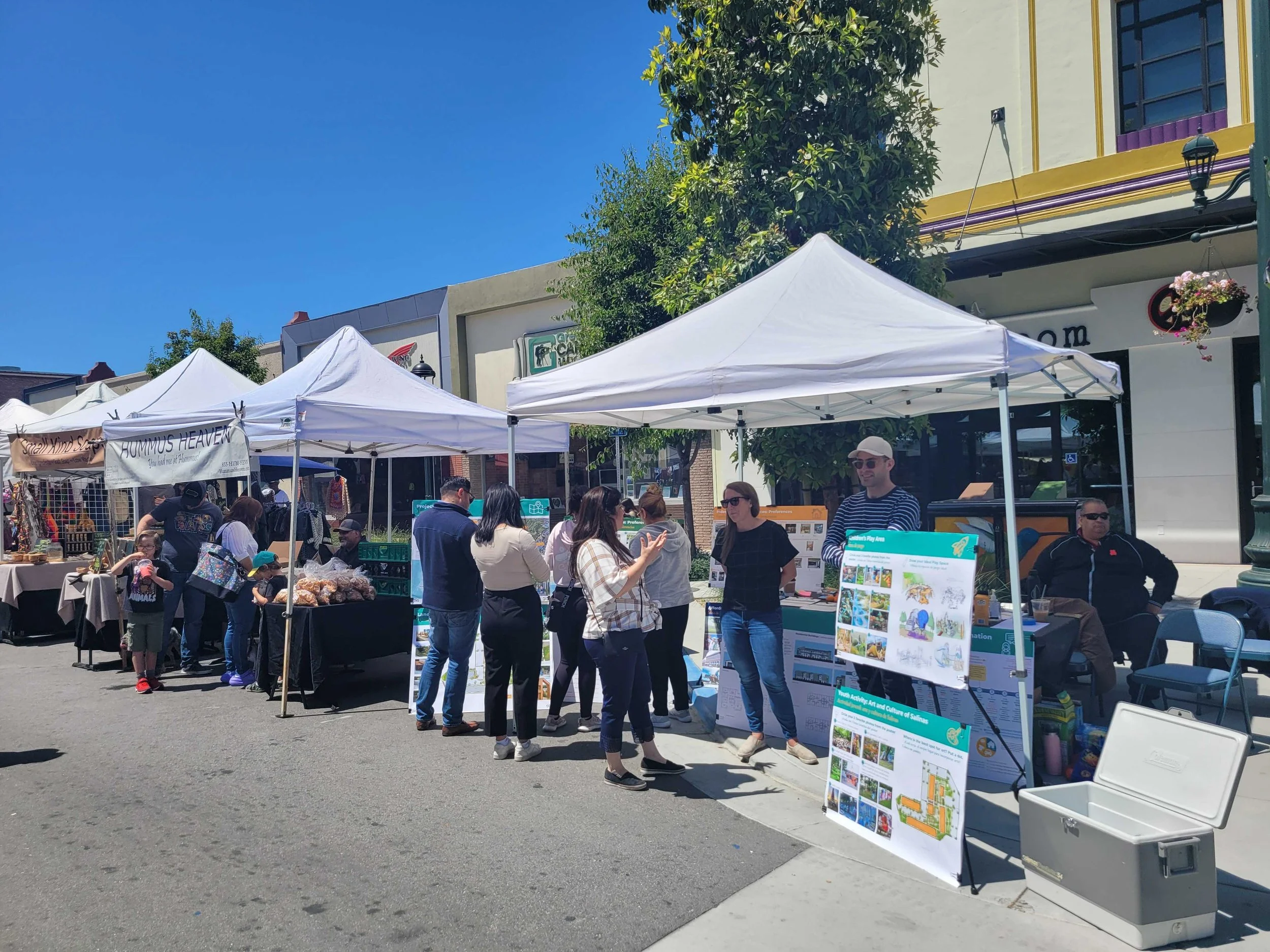
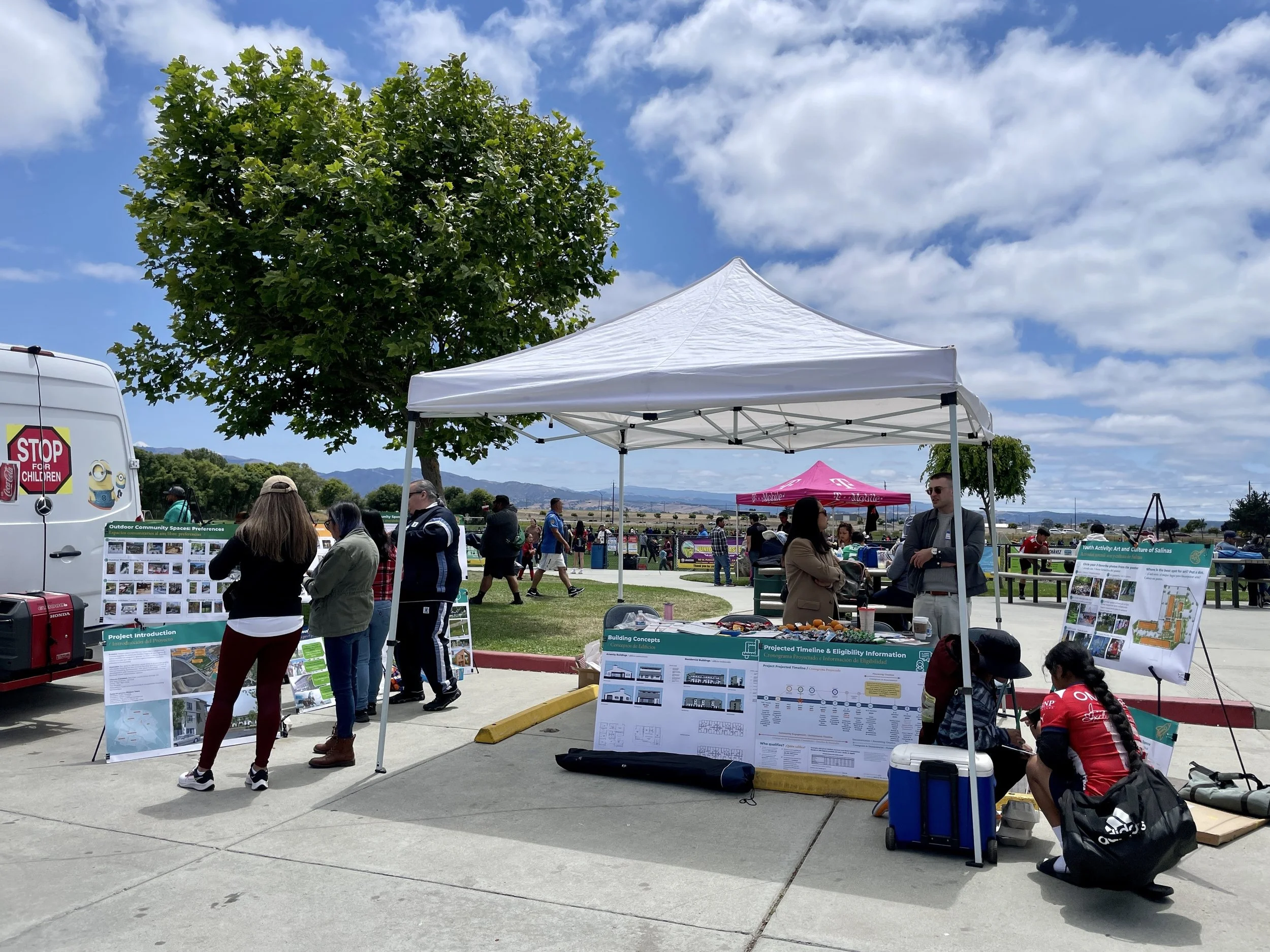
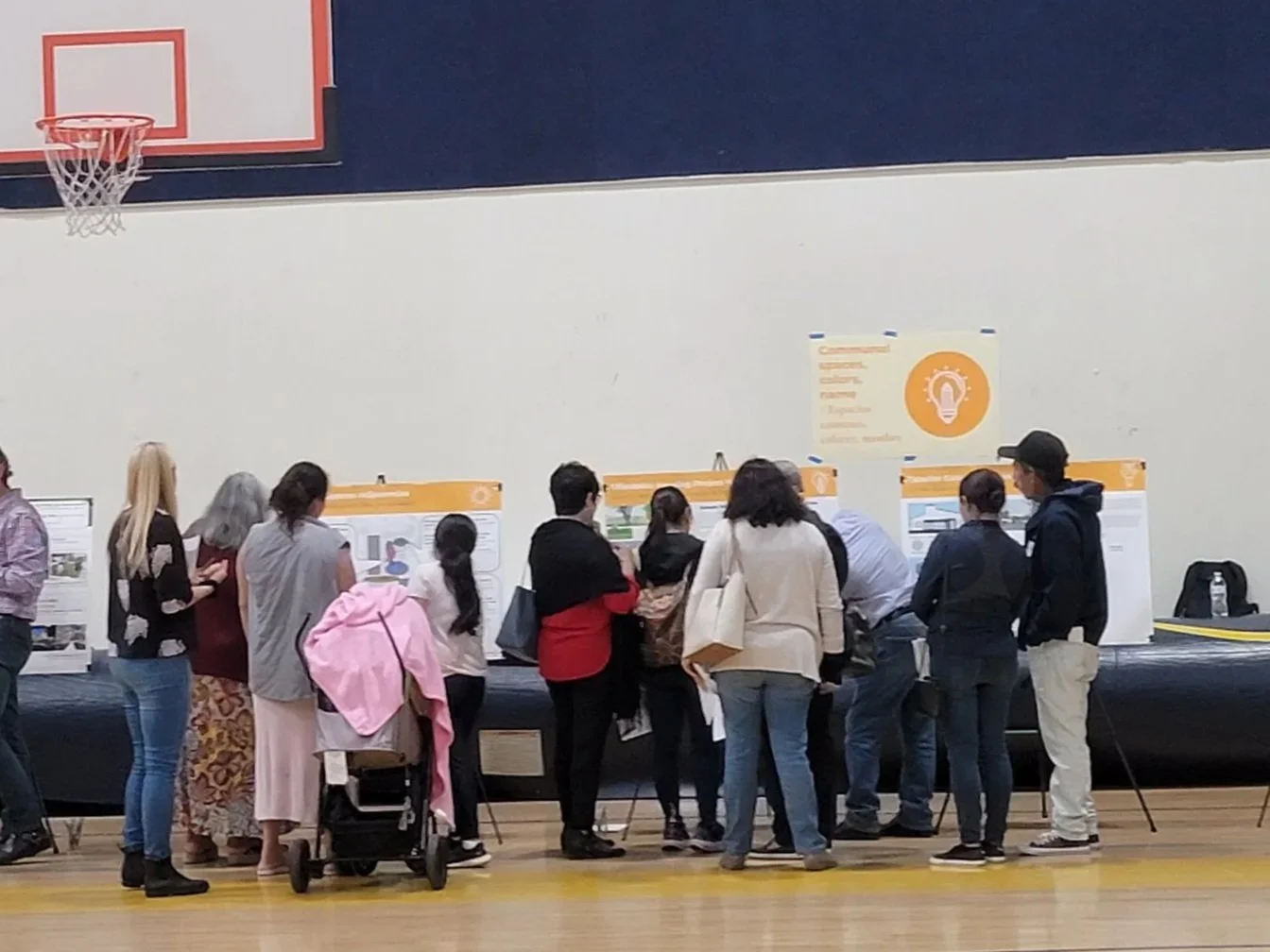
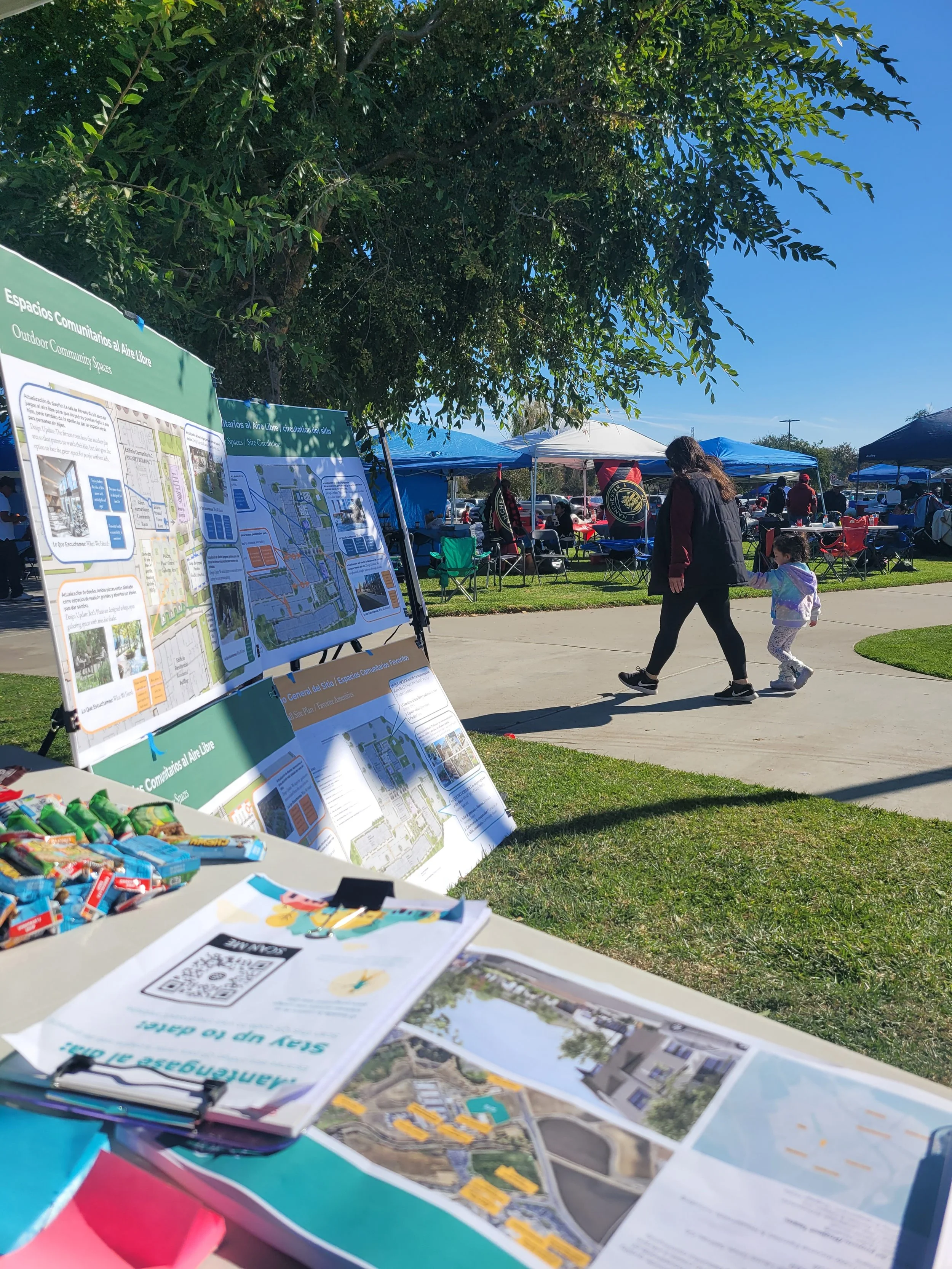
To help inform the affordable farmworker family development at 855 East Laurel Drive in Salinas, Engage FORA led a community engagement process that aimed to meet the local families and the hardworking farmworker community where they are at. Working with Eden Housing, the design team, we started by listening to local leaders and community organizations, then brought the design conversation to places people already gathered, including the Salinas Regional Soccer Complex and Old Town Farmers Market.
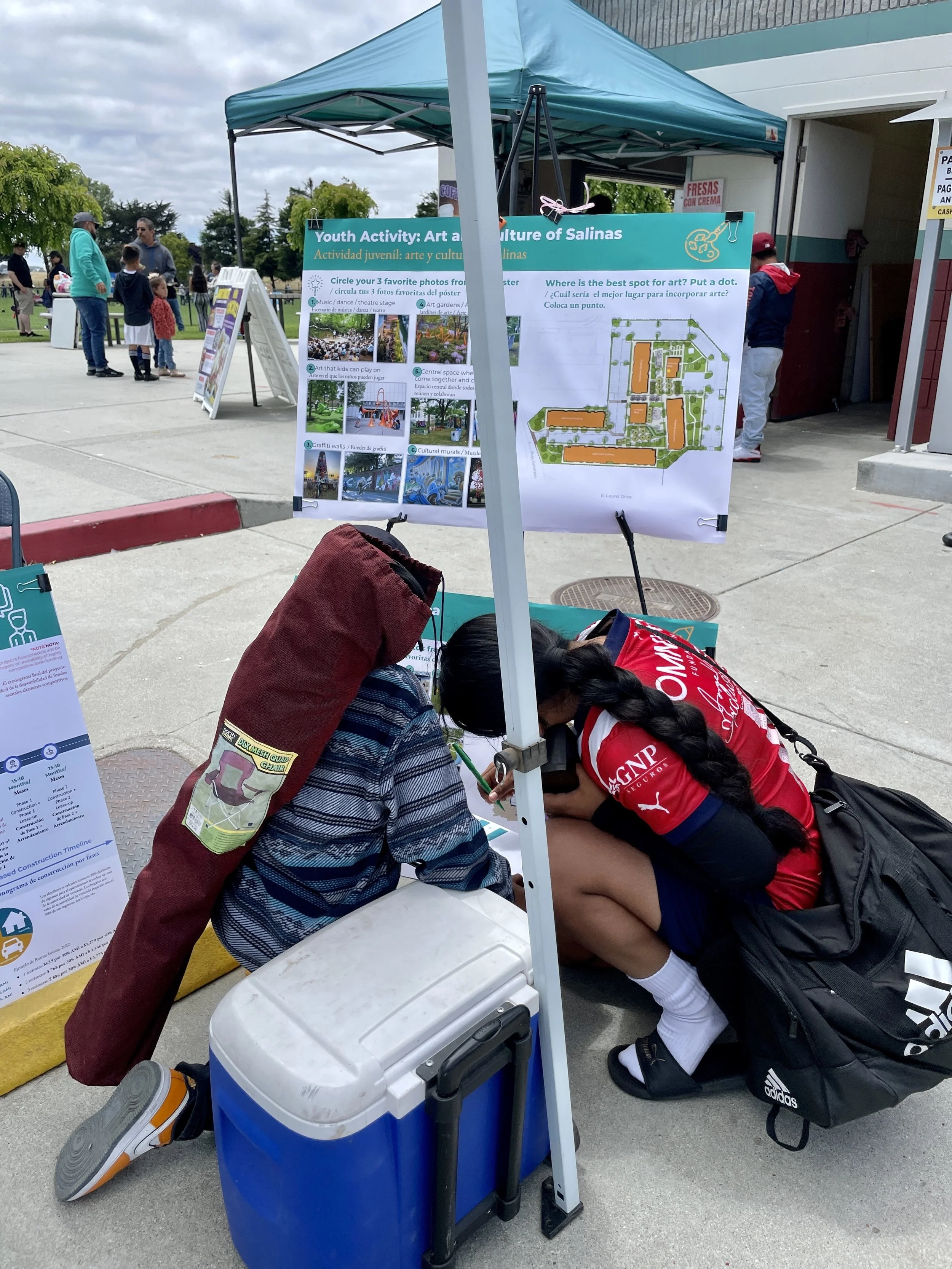
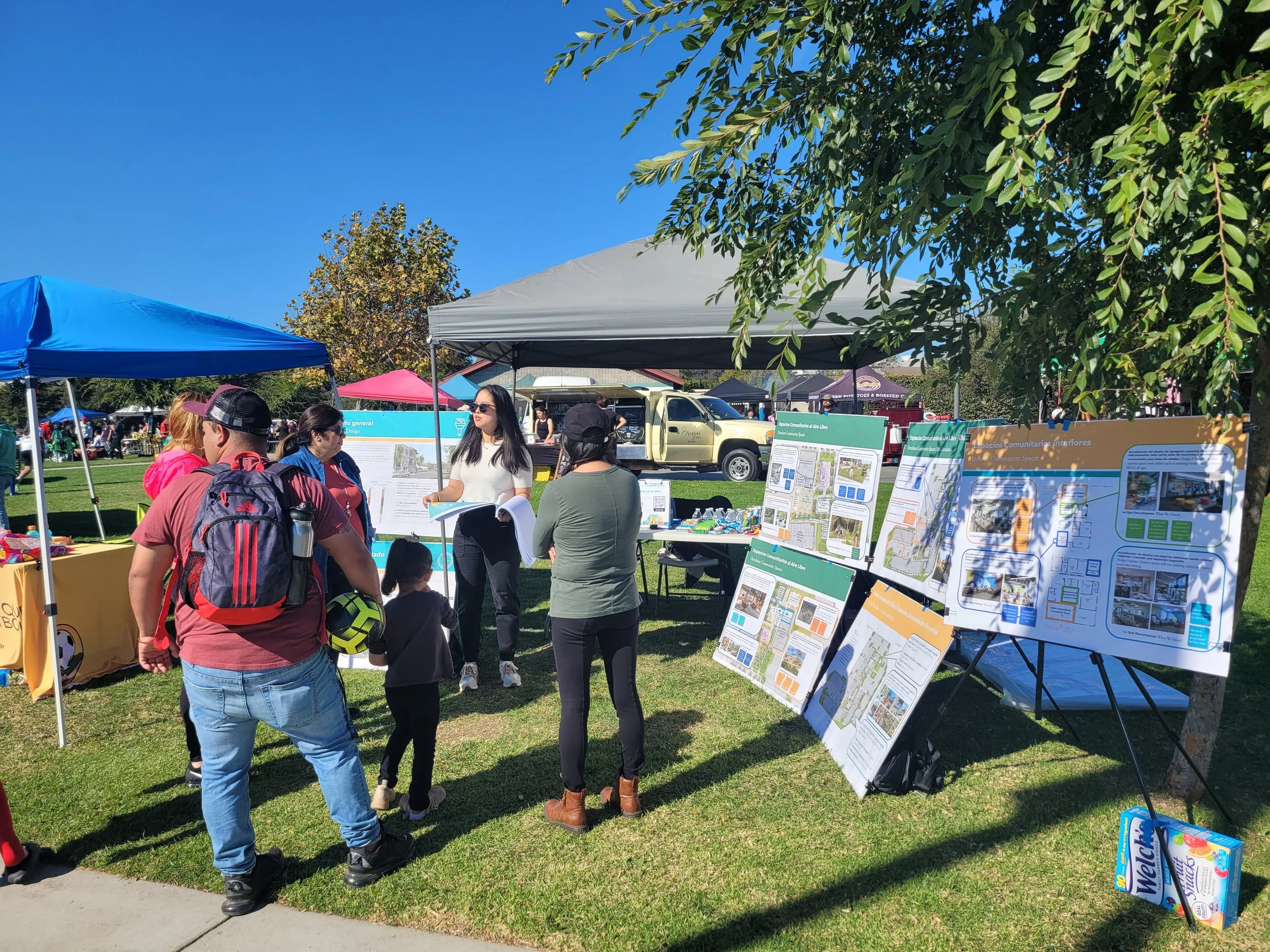
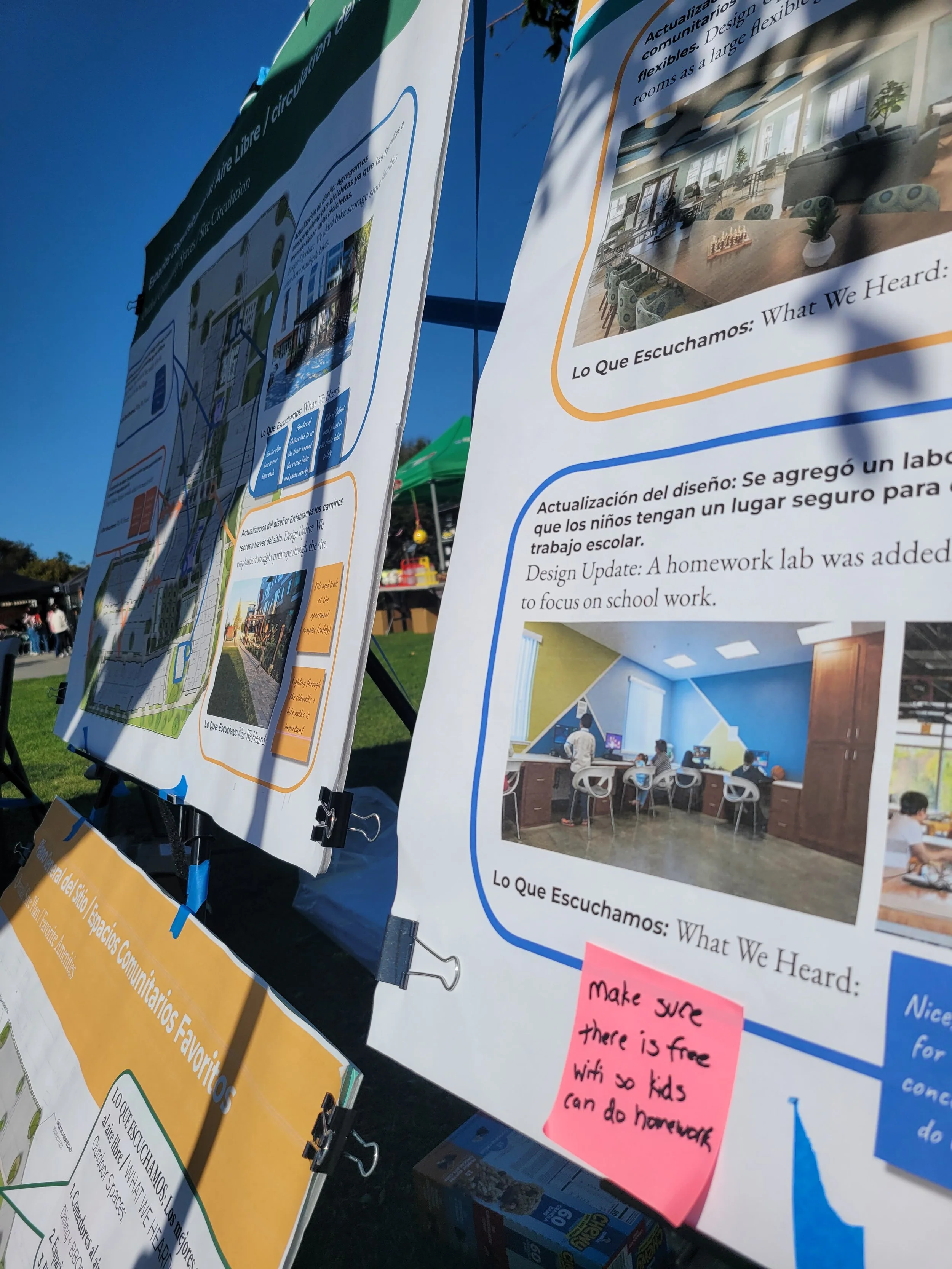
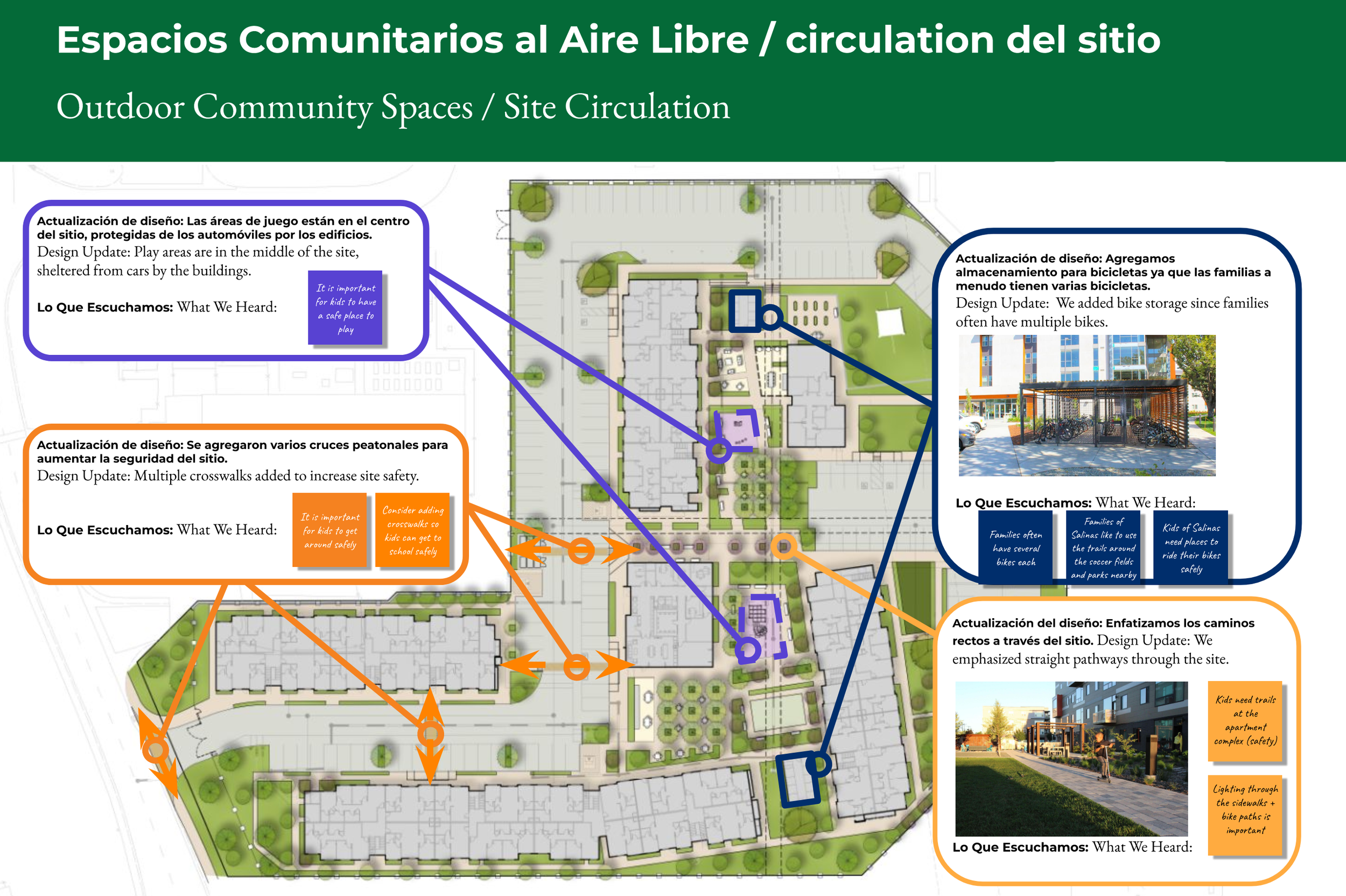
All materials were available in English and Spanish, with easy-to-read graphics that answered common questions about the project. At every event, participants could share feedback in conversation or in writing. Co-creation activities focused on the topics the community cared about most, kid-friendly design, connections to nature, and cultural gatherings. We translated that input into clear direction for the design team. The results include a protected play area at the heart of the development that parents can see from nearby gathering spaces, a dedicated room for a youth homework club, and indoor-outdoor dining spaces for family meals and cultural celebrations.
Meeting busy Salinas families where they already gather
/ Top 10 Community-rooted Values Heard
🎉 Room for cultural celebrations. Make space for large family gatherings, shared meals, and celebrations that reflect the traditions of Salinas farmworker families.
🤝 Easy ways to meet neighbors. Create welcoming places where everyday encounters can turn into friendships and a sense of community.
🛝 Safe places for children to play. Give kids protected outdoor spaces to play, explore, and spend time together.
📚 A place to focus and learn. Provide dedicated homework space with access to technology.
👪 Shared spaces that work for parents. Put places for adults to gather near children’s play areas, with clear views between them and easy access to technology, resources, and services.
🚲 Biking as part of daily life. Make room for families’ bikes and connect them to nearby trails.
🌿 A connection to nature. Keep green space within reach and reflect the farmland, mountains, and coast that families associate with home.
🌎 Care for the local environment. Consider flooding and climate change, their effects on farming, and the need to protect habitat for endangered species.
☀️ Space to move and unwind. Provide places to exercise and quiet spots to relax, with colors and design choices that make shared spaces feel welcoming.
🏠 Homes that work for farmworker families. Such as choosing durable, easy-to-clean flooring instead of carpet.
/ From Community Voices to Design Decisions
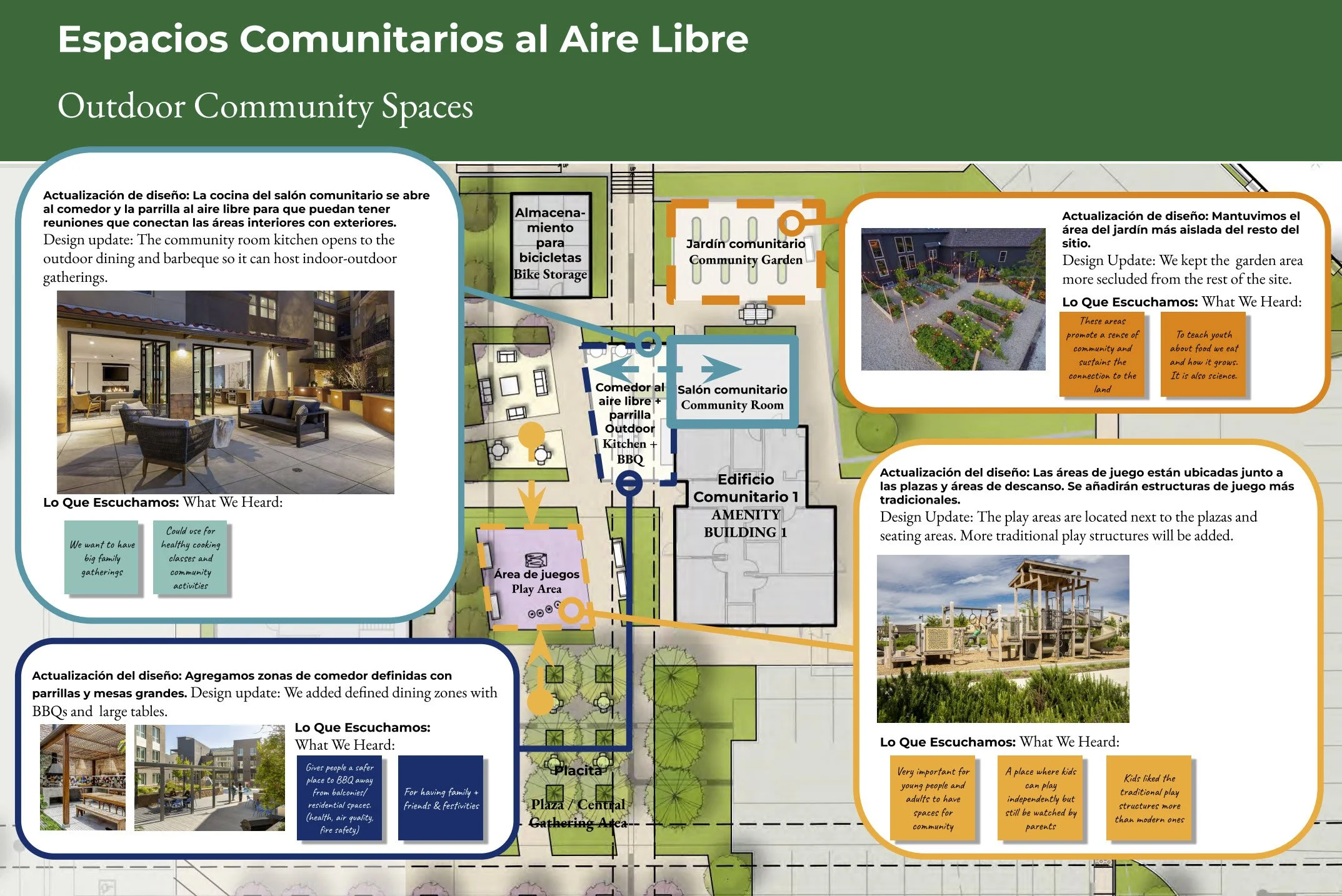
/ Impact
Engagement by the Numbers:
Beyond the Numbers:
200+ Salinas community members engaged, with outreach focused on local low-income families and farmworkers.
8 interviews with local leaders and community organizations helped shape the engagement plan.
4 community pop-ups brought the project to places families already gathered, including the Salinas Regional Soccer Complex and Old Town Farmers Market.
1 community workshop gave participants a chance to weigh in on design options shaped by what we heard earlier.
The design better reflects local Salinas culture. Drawing on community preferences, the design team placed placitas between residential buildings, with places to sit and catch up with neighbors. In response to how local families get around and spend time outdoors, the design team increased bike parking with centrally located enclosures, and added crosswalks linking sidewalks to trails. Families also favored modern farmhouse façades paired with colorful, Spanish-influenced landscape details.
Participants got information about affordable housing. We shared information in English and Spanish about who qualifies, what to expect from the project timeline, and where to find help applying for affordable housing.
Participants saw where their ideas made a difference. We reported back on how community feedback shaped the design. Participants expressed strong support for how the plans reflected their priorities and would serve families.